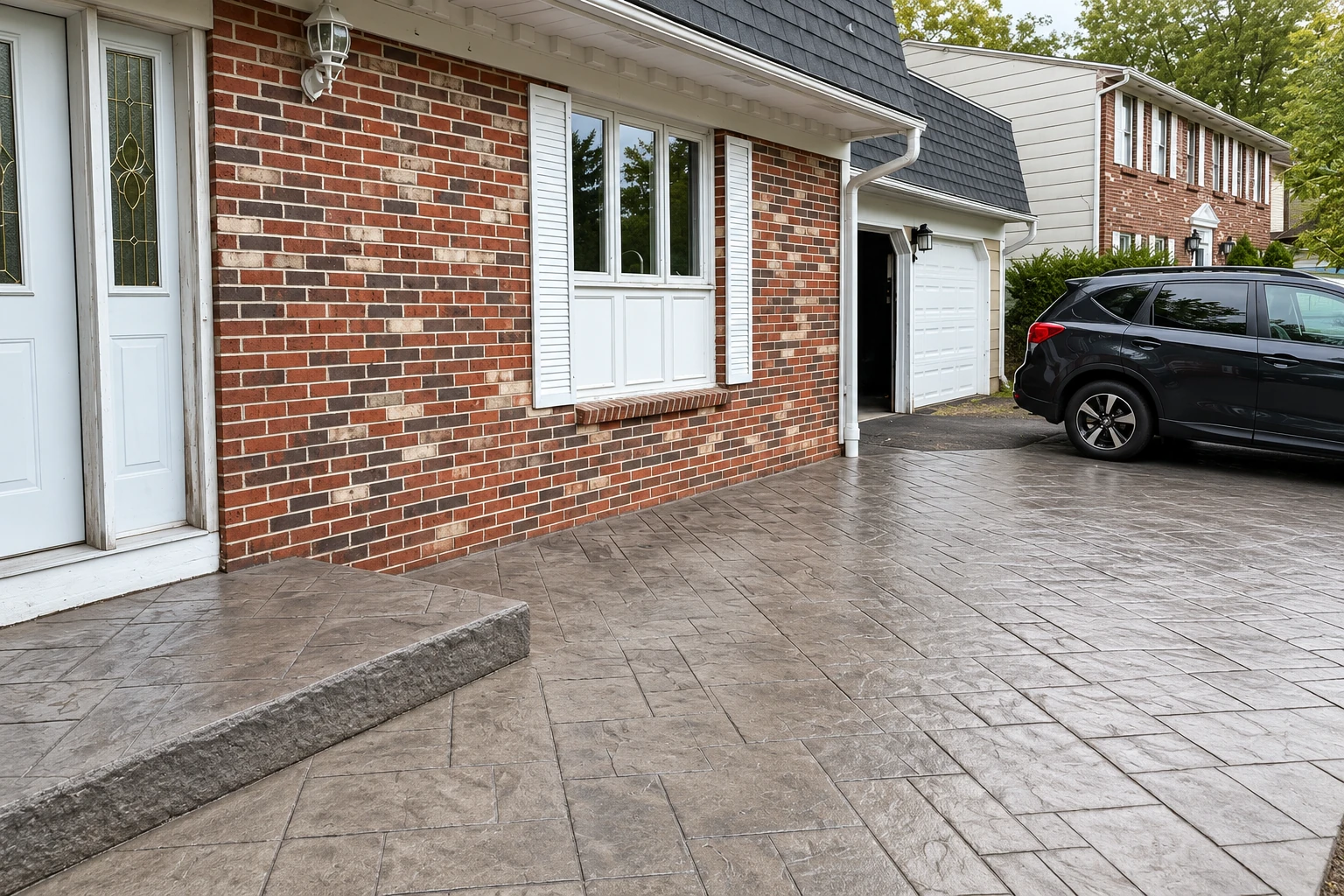
Slab foundation building in Concord NC - a firm, dry base for the house you build
Planned from the soil test to the pour
A slab foundation is the concrete floor your house sits on, poured over packed ground. Owners and builders in Concord and the cities around it call us when a lot is ready to build. I walk the site, go over the design with you and plan each step before the pour.
Why a slab foundation suits most new homes
A slab foundation is concrete resting right on the soil, over a base that's dug out and packed so the whole slab gets even support, and it's one of the most common ways to build in North Carolina.
Price moves with the size, the design and the site work, and the schedule turns on the soil test, the permit and the termite treatment. For other kinds of house foundations, see our foundation installation work, and for a shop or office lot, our concrete parking lot building.
Best for
- New homes on level lots
- Room additions
- Detached garages and shops
One floor, nothing under it
The slab is both the foundation and the floor, so there's no crawl space underneath to vent, keep dry or crawl into later.
A design picked for your lot
We talk through a monolithic or stem wall slab with you before we dig, so the foundation fits your lot and your plans from the start.
Nothing skipped on pour day
Termite treatment and the vapor barrier, a plastic sheet that keeps ground moisture out of the slab, go on the schedule ahead of time so neither gets rushed.
Money spent below the surface
If the budget's tight, I'd cut back on the finish before the base, because a nice top over a weak base settles anyway.

What keeps a slab foundation sound under your house
- The soil gets tested on your lot, since county soil maps are for planning only, then we dig out and pack the base so the slab isn't sitting on loose dirt.
- The vapor barrier goes directly under the slab, touching it, because moisture coming up through concrete can loosen flooring glue and leave floors peeling or warped.
- I look at the lot and write the estimate, then run our own crew through forming, pouring and finishing. We're licensed and fully insured.
Monolithic, stem wall or a thicker edge
I go over these with you before we dig, because the right one depends on your lot, your house plan and how the outside walls need to be carried.
Monolithic slab
Footings and floor poured together in one piece, which usually suits a flat lot and keeps the work to a single pour.
Stem wall slab
Footings and short walls go in first, then the slab, which helps when the lot slopes or the floor should sit higher.
Thickened edge
A monolithic slab built deeper around the outside, so the edge gives the outside walls more support underneath.
Addition slab
A smaller slab set beside your existing house, planned so the new floor lines up with the floor you already have.
Tell us about your lot and plans
Send the lot address, the planned home size and any soil reports. We reply within one business day and set up a free on-site estimate, with no obligation.
Slab foundation questions we hear
What is the difference between a monolithic and a stem wall slab?
A monolithic slab is poured as one piece, while a stem wall slab gets its footings or short walls first and the slab poured on top or inside them. The stem wall helps carry the outside walls and keeps frost from heaving the slab, and a monolithic slab gets a thicker outer edge for the same reason.
How much does a slab foundation cost near Concord NC?
A new slab foundation in the Charlotte metro area usually costs about $5 to $11 per square foot installed, and that's the area's going rate, not a quote. Your number depends on the size, the design and how much site work the lot needs. Our written estimate lists what's included and what isn't, so you can compare bids.
Who issues the building permit for a slab foundation in Concord?
Cabarrus County's Construction Standards Division handles building permits across the county, and in Concord your application gets city zoning review and county building review together. When your slab needs a permit, we handle the application and the scheduling with them. If you'd rather check with them yourself, we'll point you to the right office.
How is a new slab foundation protected from termites in North Carolina?
State guidance says the soil under and around a slab must be treated for termites after the fill goes in and before the concrete is poured. If a slab ever gets poured without it, a release form tells the owner which areas went untreated, and only the owner should sign it.
Will a new slab foundation crack like my old driveway did?
Concrete usually cracks somewhere, so we cut control joints, straight seams that give it a place to crack, so the cracks usually follow lines we chose. Joints guide cracks rather than stop them, so ask us where they'll run on your slab. Gaps where a slab shrinks away from the wall can also let termites reach the wood above.
Does a slab foundation contractor need a license in North Carolina?
Under North Carolina law, a general contractor has to be licensed through the NC Licensing Board for General Contractors when the total project cost is $40,000 or more. That's the cost of the whole project, not just the slab, so ask whoever is running your build whose license covers it.
Other work around a new build
Foundation installation
When your plan calls for a different kind of foundation than a slab poured on the ground.
Explore Foundation installationConcrete parking lot building
When a shop or office on a slab also needs a paved lot that drains and holds up to traffic.
Explore Concrete parking lot building